Venice Summer Academy
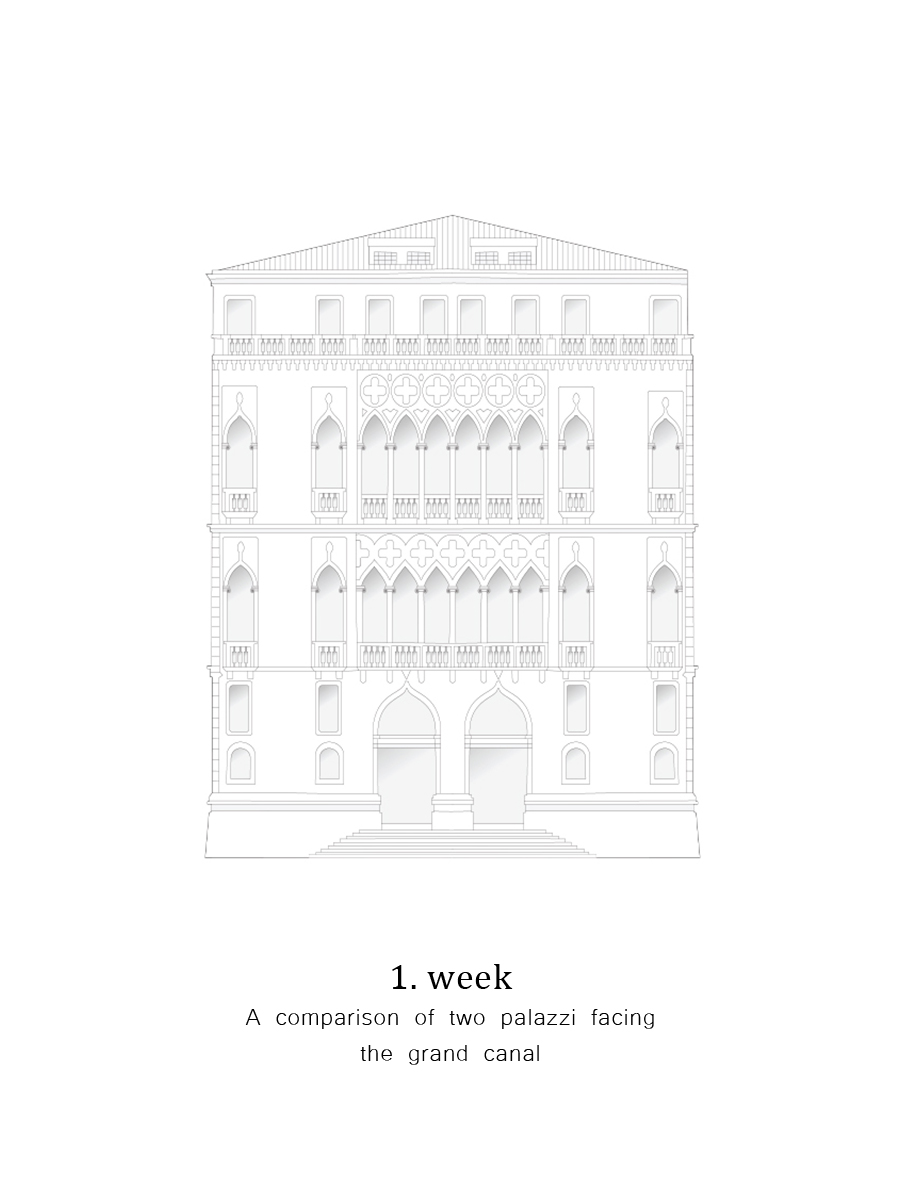
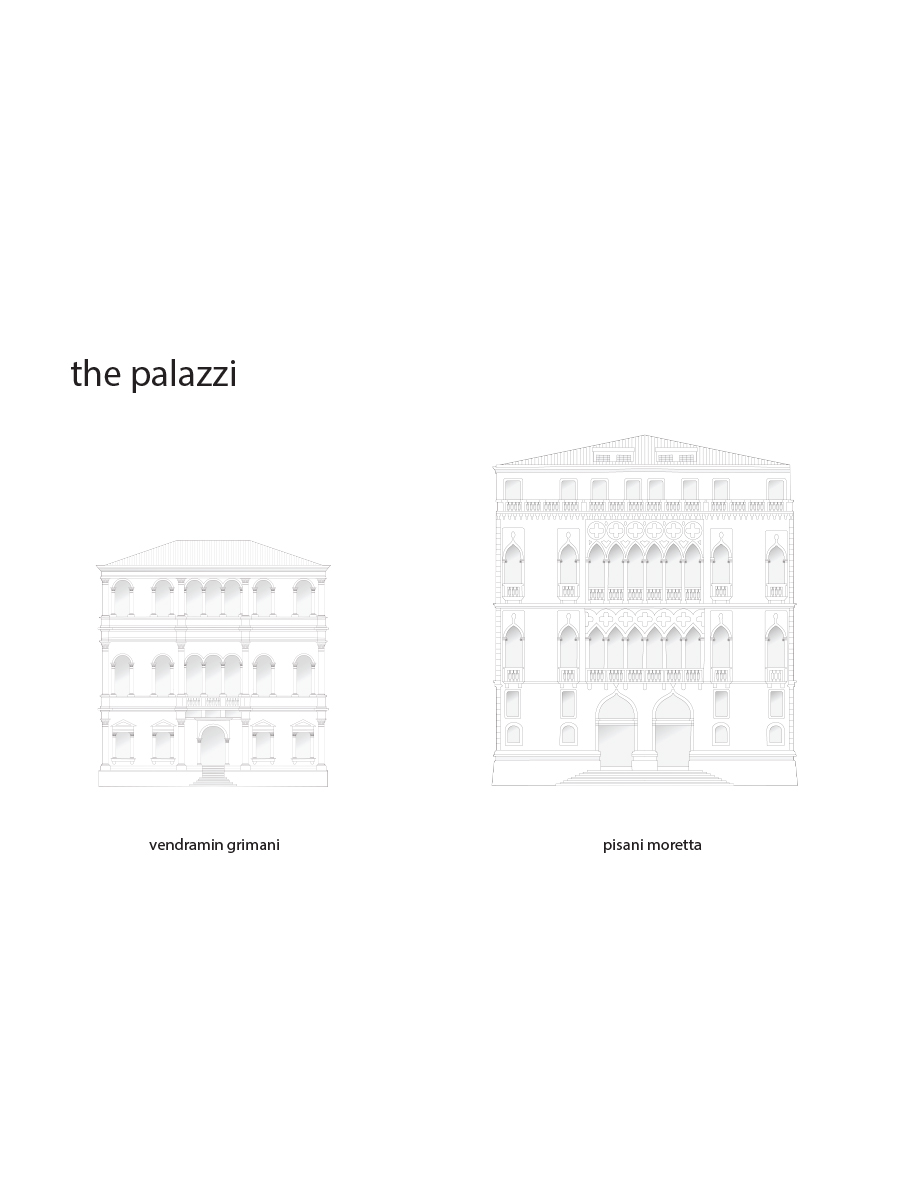
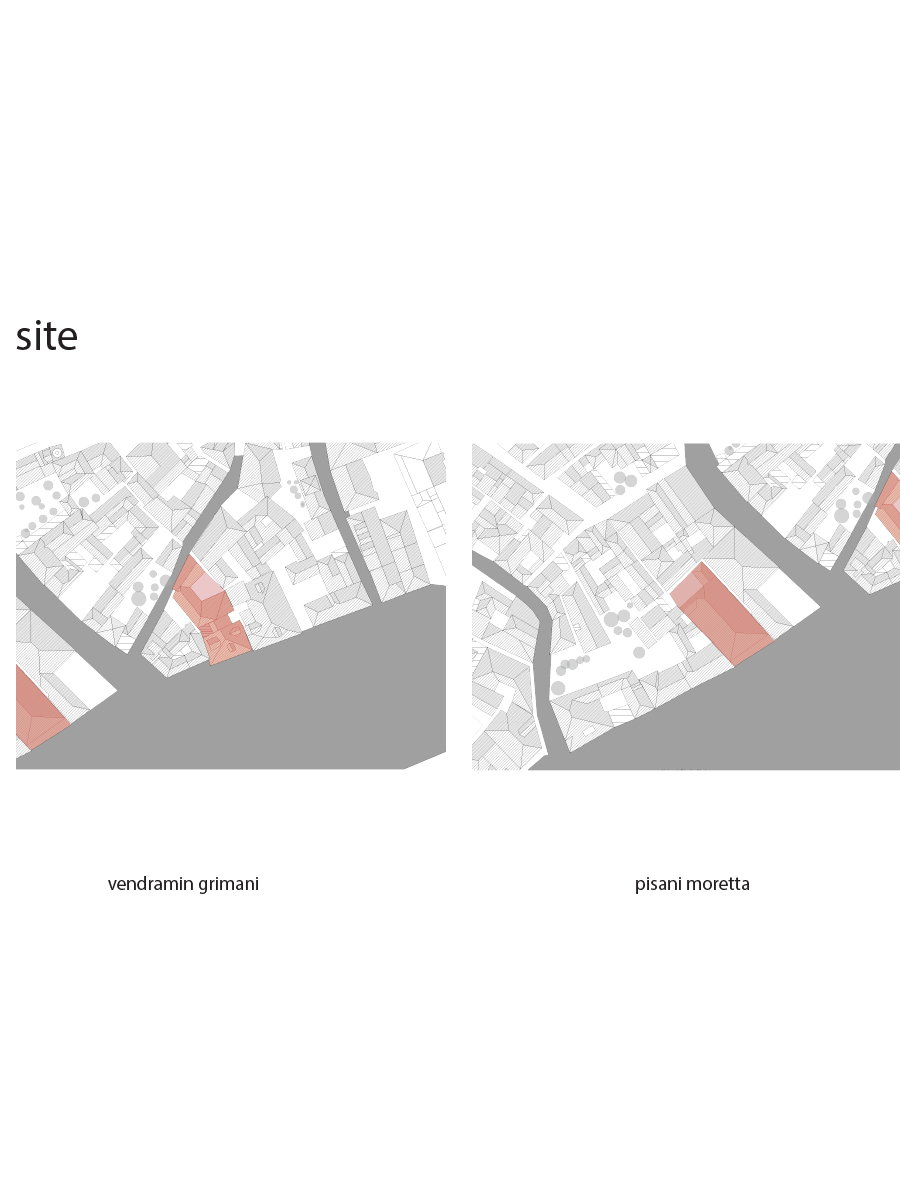
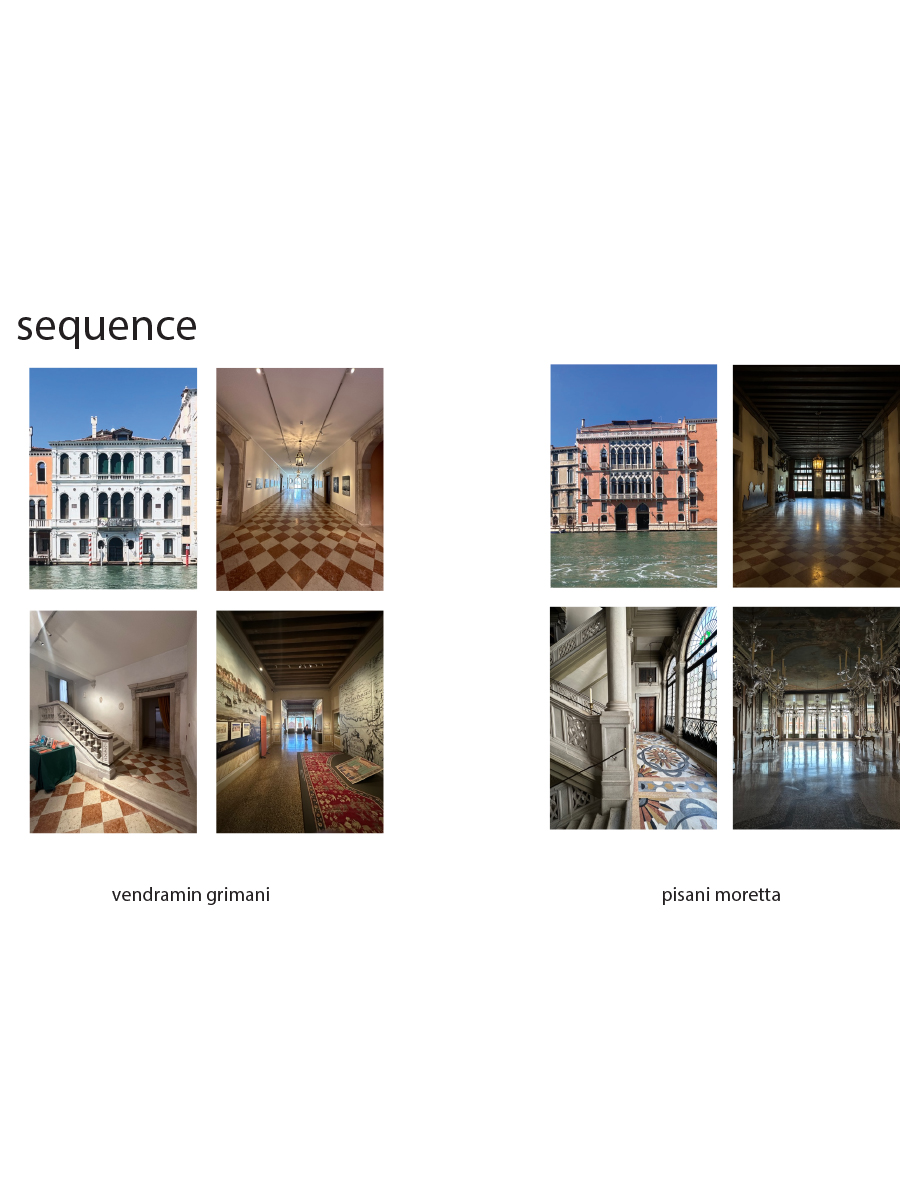
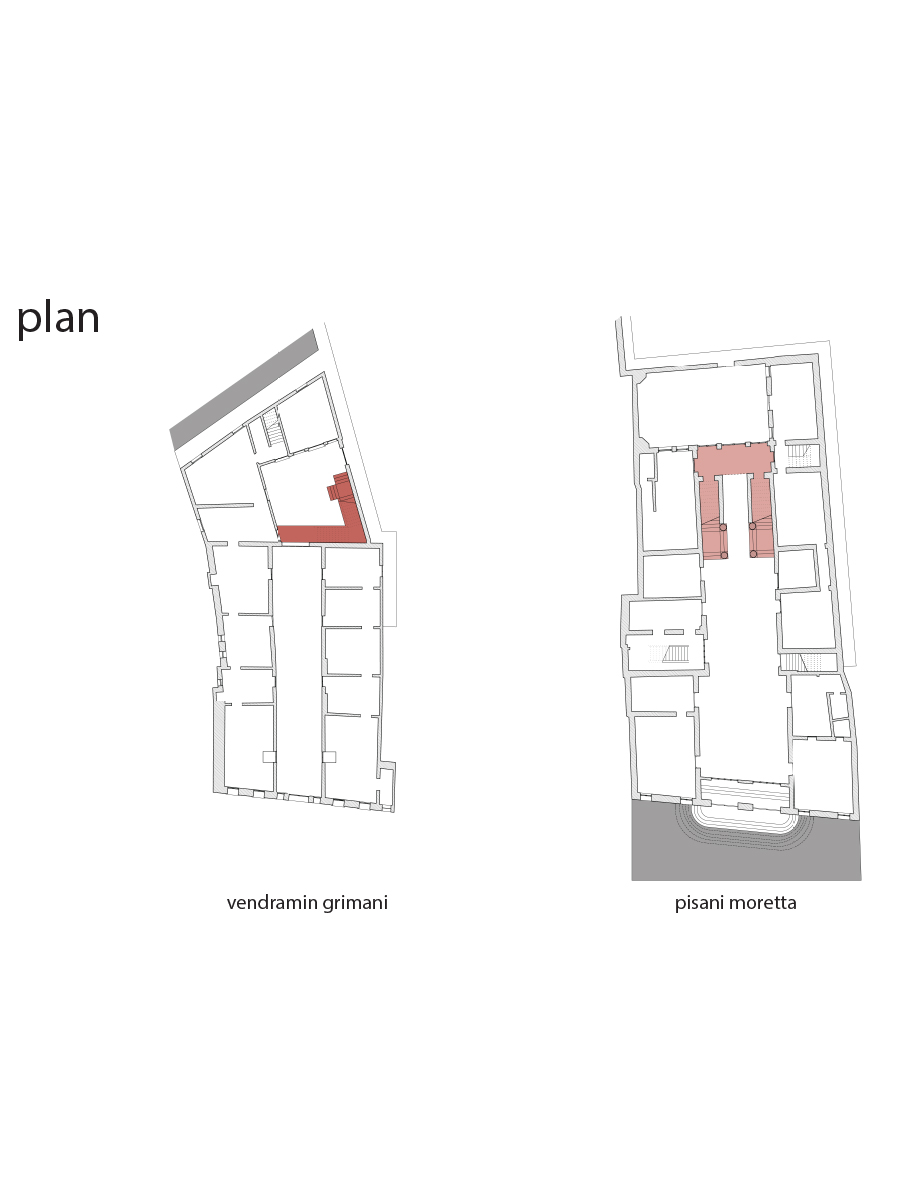
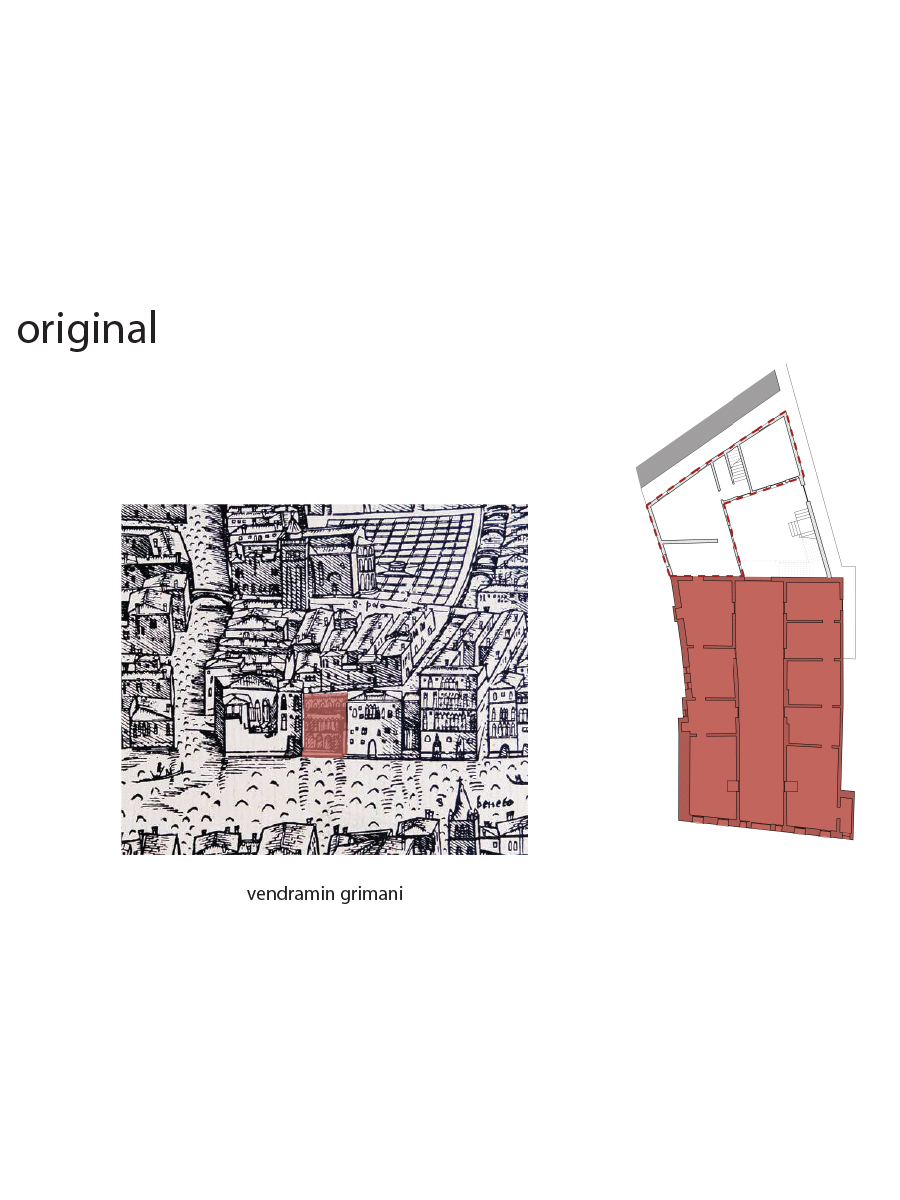
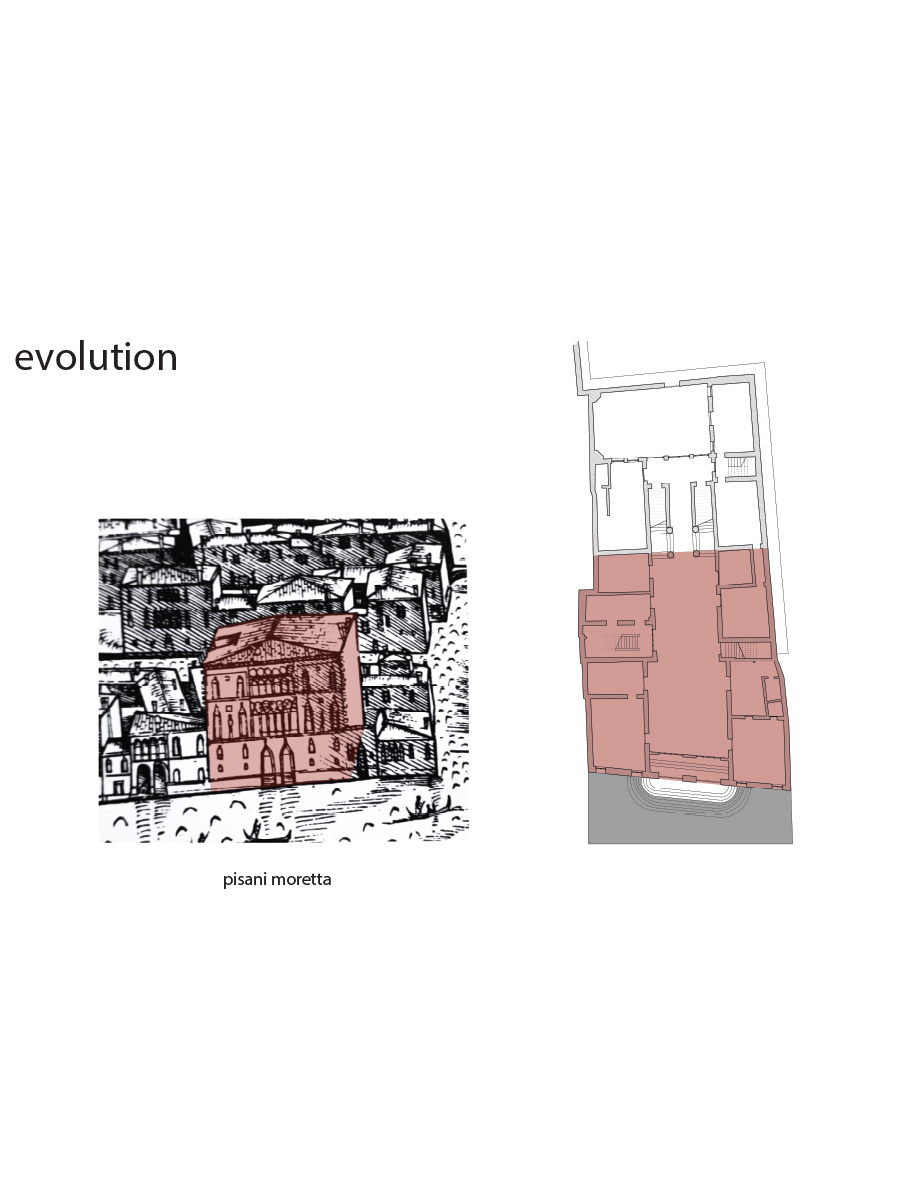
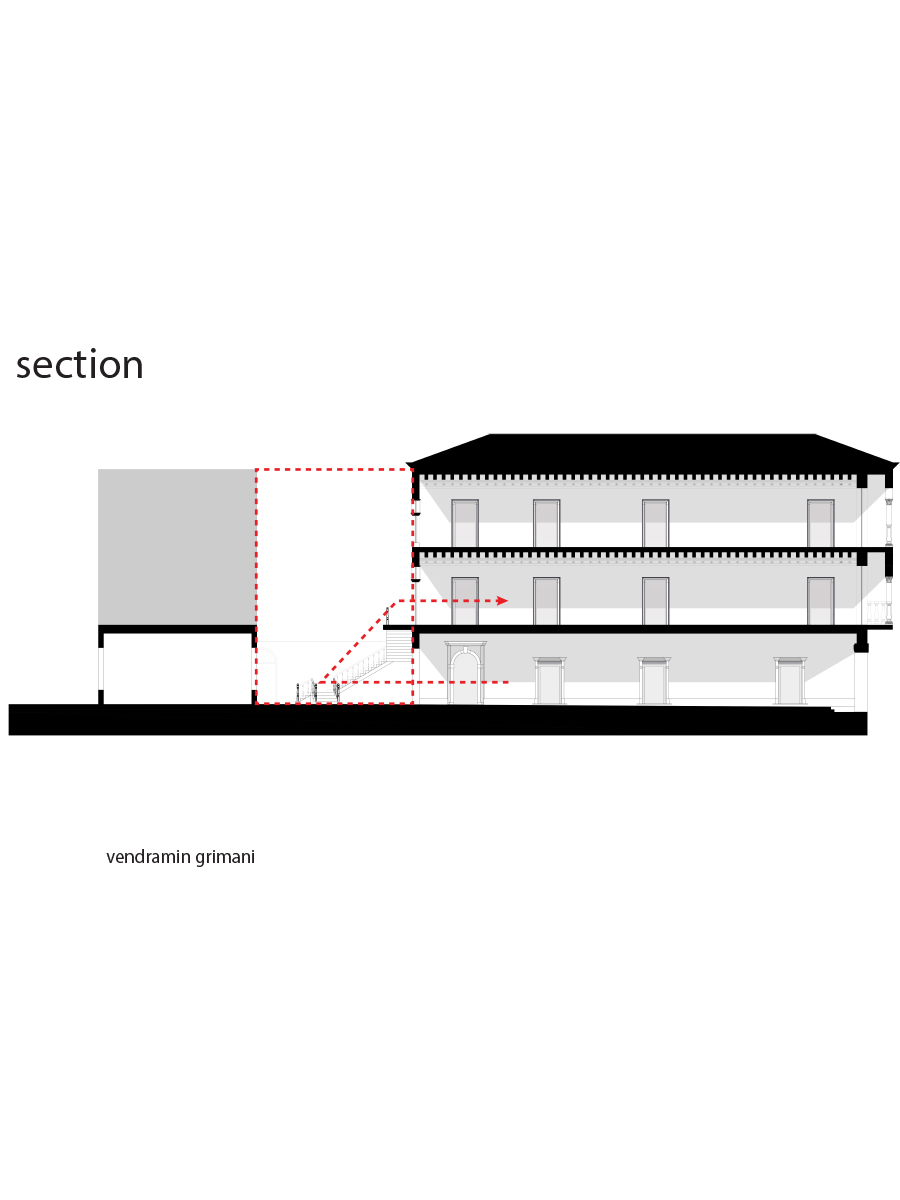
By analysing a selection of historical Palazzi on the Canal Grande, students learn about the typology and specific characteristics of the noble Venetian home on the waterfront. They will trace the typological and design differences between the Veneto-Byzantine and Gothic casa and the Renaissance, Baroque and Classicist
palazzi, as well as their similarities.
On the first day of the Summer Academy in Venice, the students will be divided into
mixed groups. Together with a teacher, they will visit a number of selected palazzi
in one of the five sestieri bordering the Canal Grand
The analysis of a palazzos includes the examination of ;
1. its history of origin,
2. the integration of the building into its immediate urban context,
3. the design and structuring of its façade facing the Canal Grande,
4. the design, structuring and use of its floor plans, especially the ground floor and
the piano nobile,
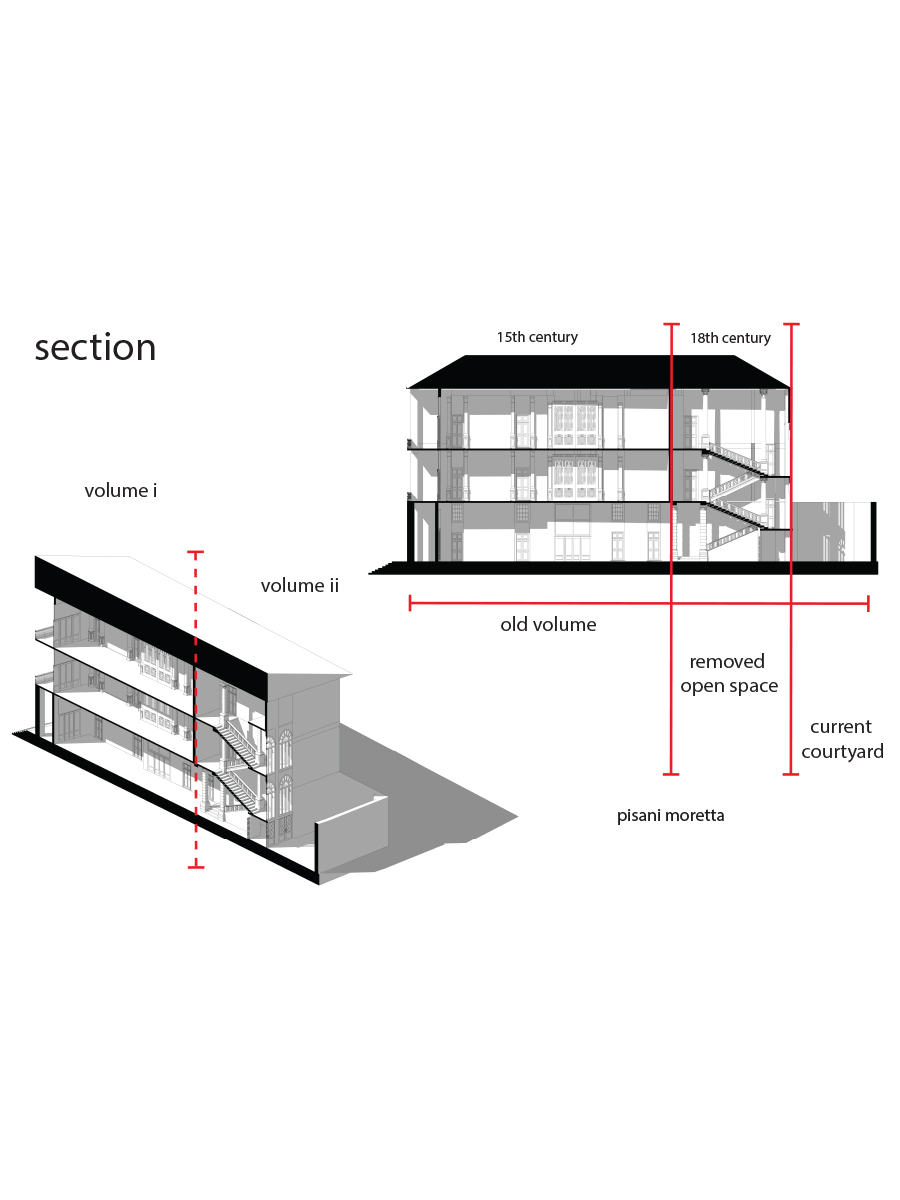
5. the height evolution and shaping of its rooms in section, in particular the androne
on the ground floor and the portègo in the piano nobile (central access halls) as
well as the vertical access rooms,
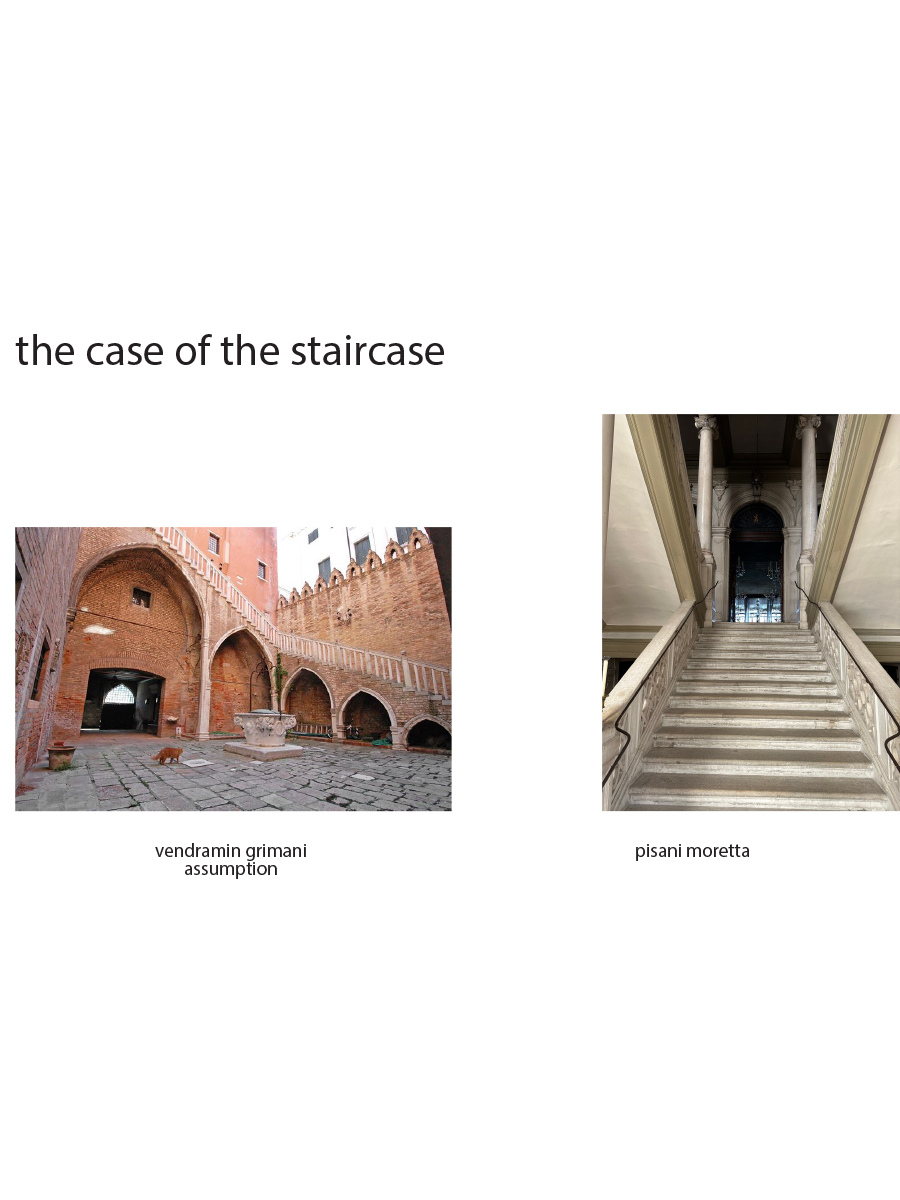
6. the configuration of the route from the entrances from the water and from the
land via the androne on the ground floor, the main staircase to the portègo in the
piano nobile, the change in its shape and use over time.
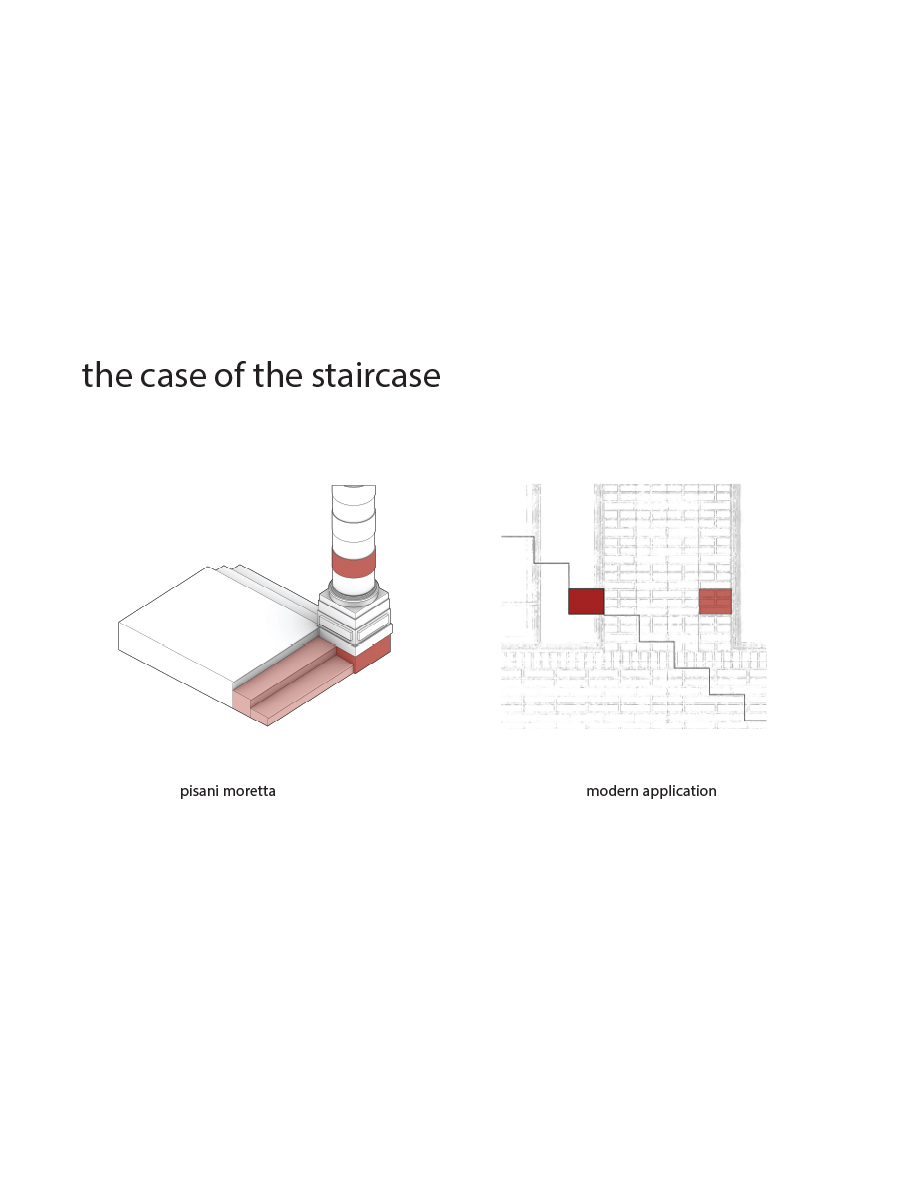
We find outt the type of student who understands that the columns of a baroque staircase share a measuring system, which in turn provides the three-dimensional grid for an entire building.
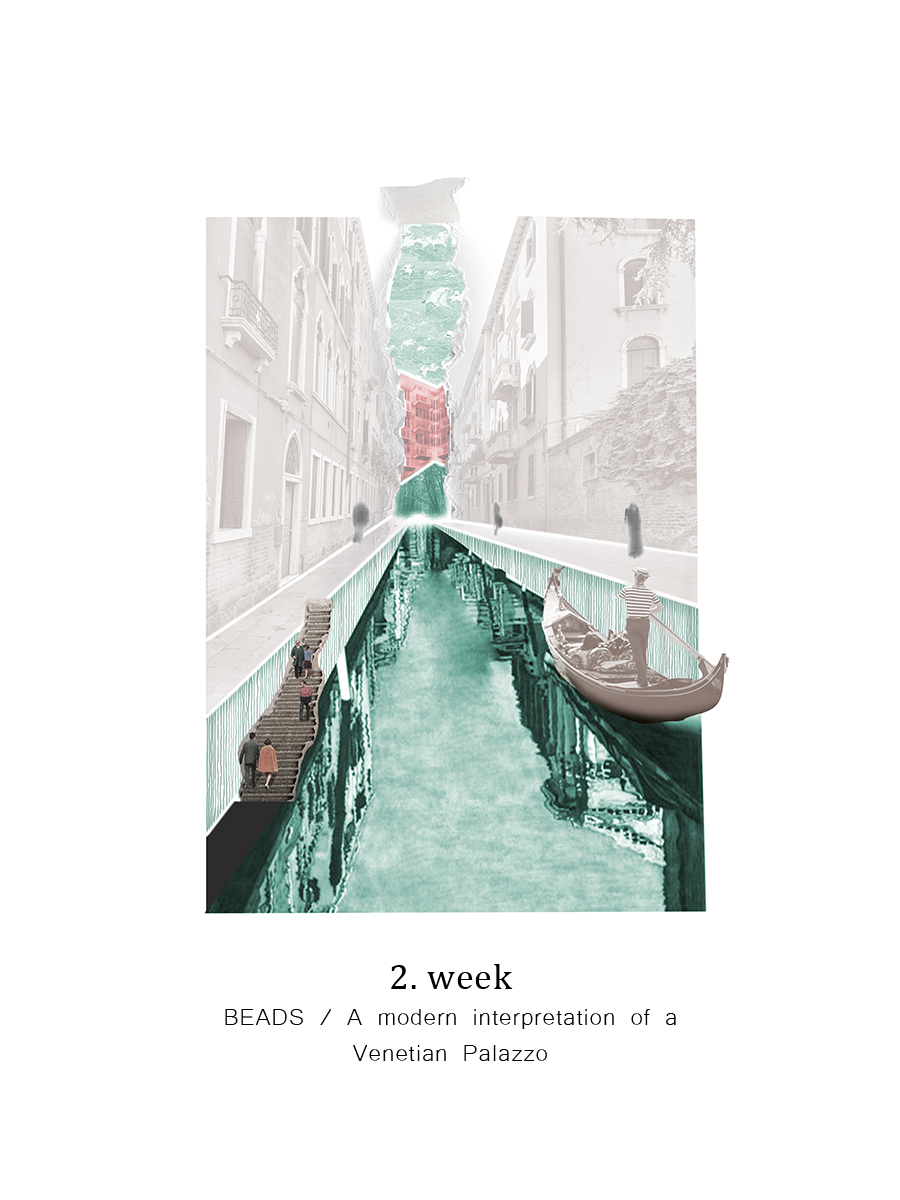
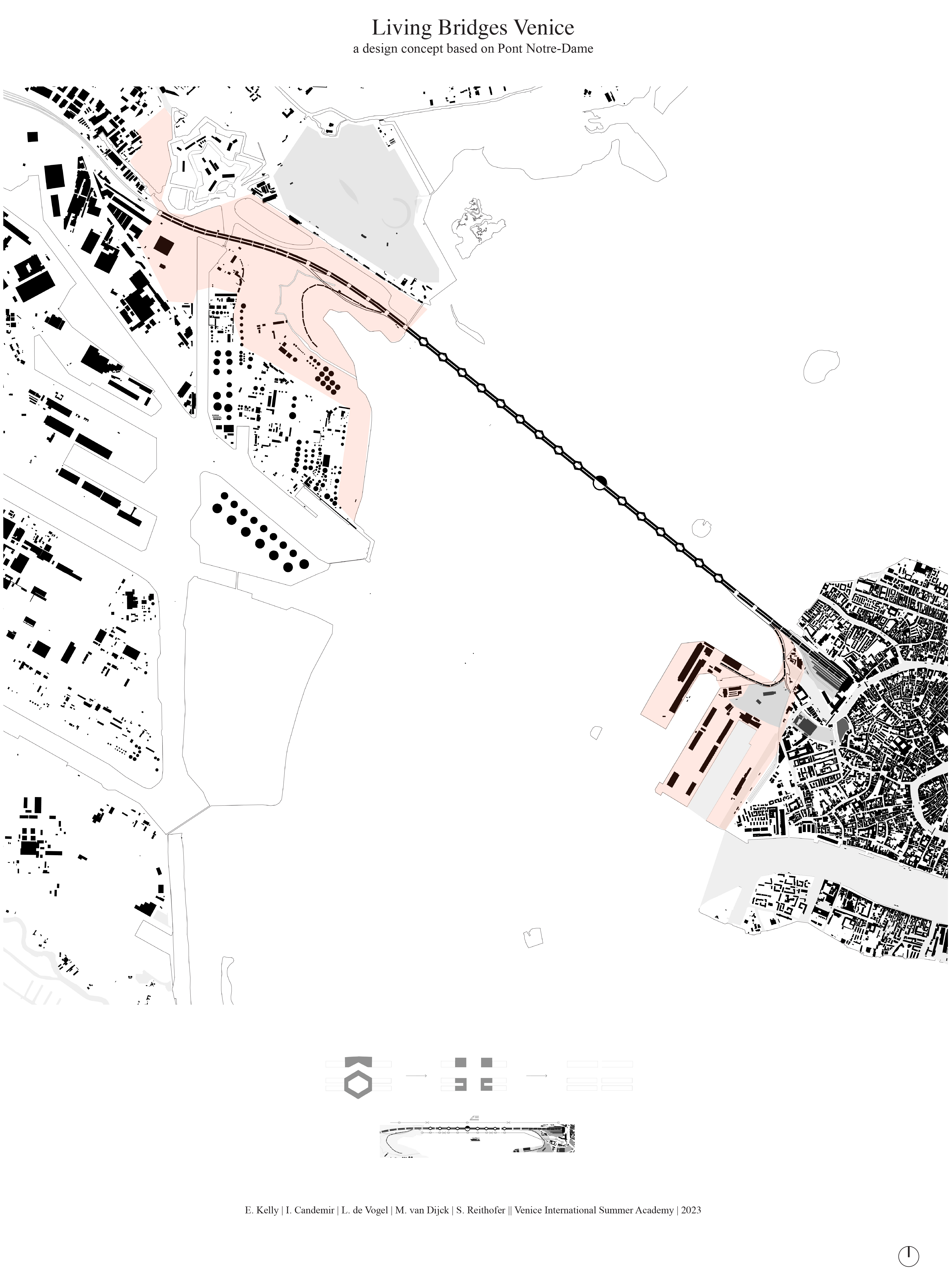
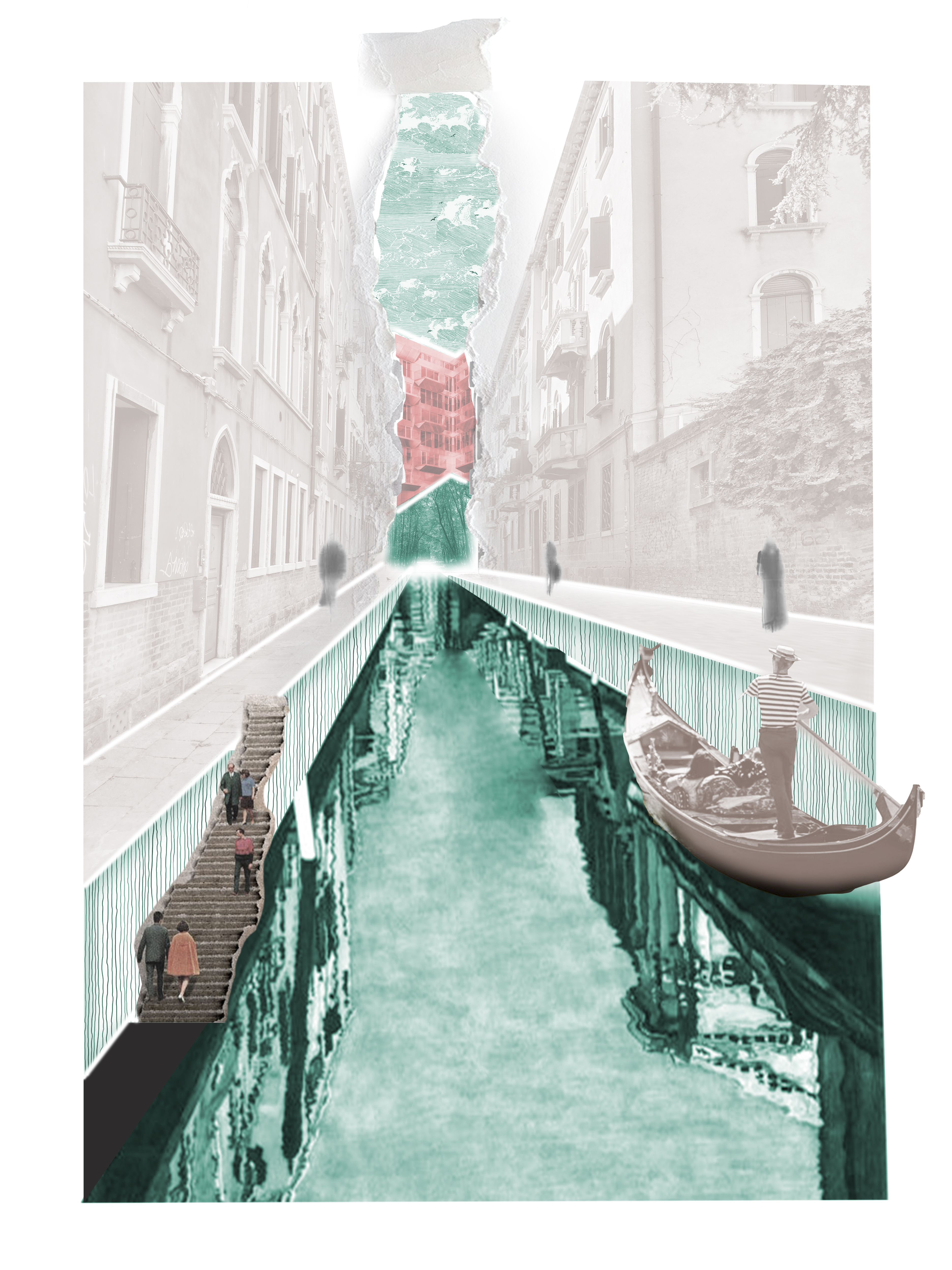
The investigated concept of the construction on the Ponti Translagunari derives from the Bridge buildings on the Pont Notre Dame. It is defined by a narrow streetscape and the bordering high buildings give it a
spatial definition.
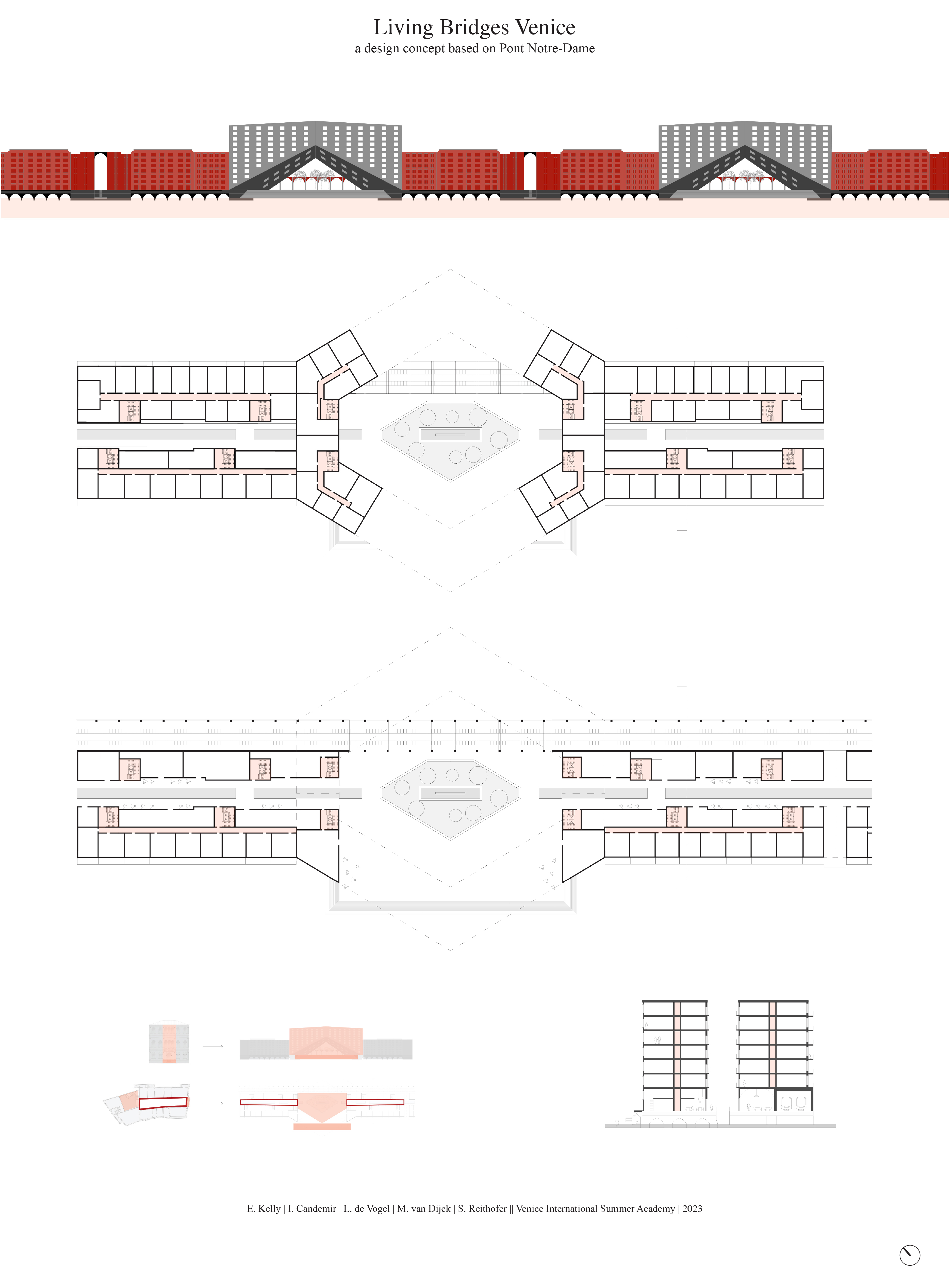
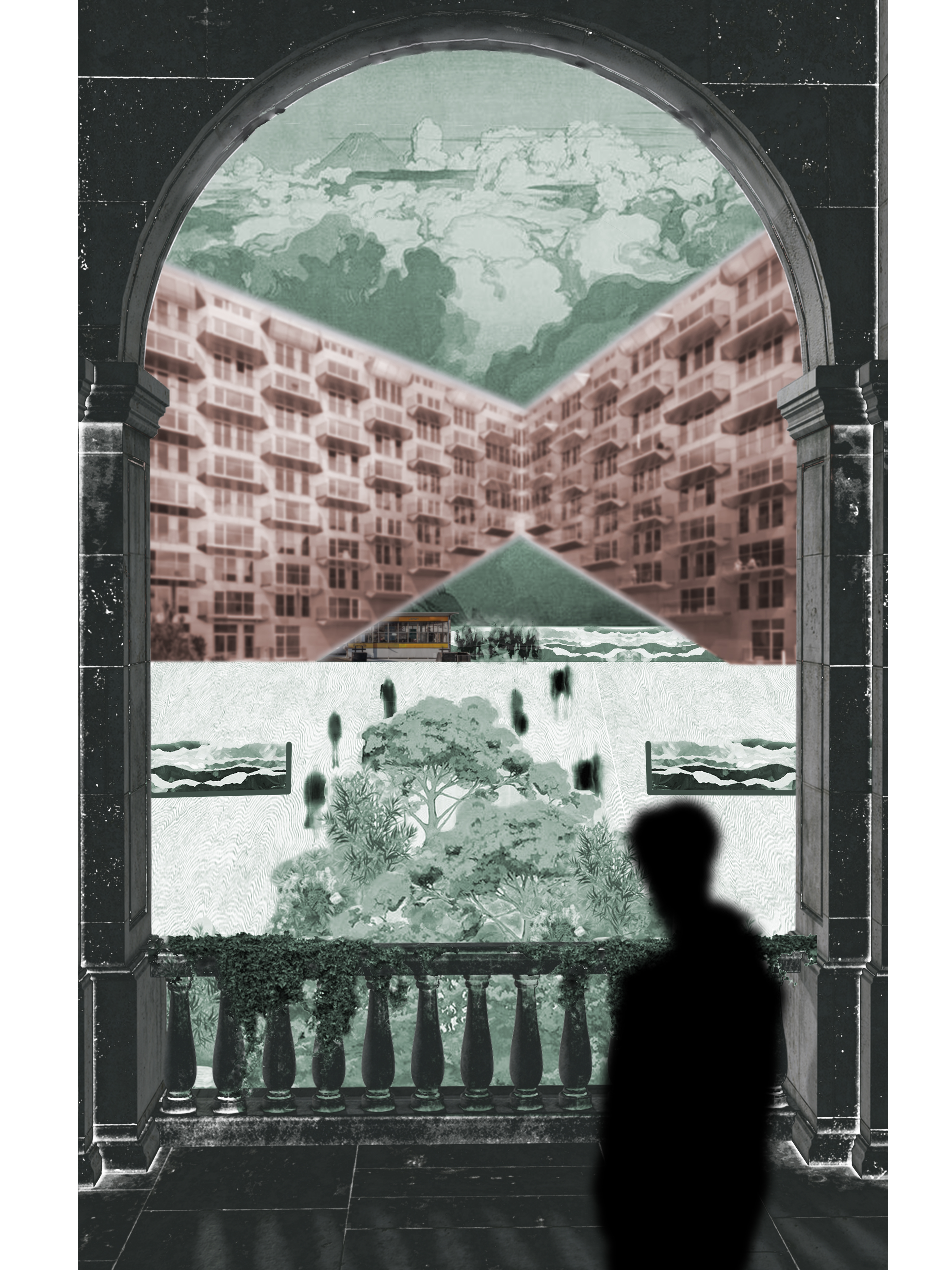
The base unit is segmented into three main structures, with the central portion assuming the most prominentrole, flanked by complementary wings. The central opening houses a new interpretation of the venetian courtyard, which not only gives access and views to the waterfront, but also gives rhythm to the spatial
repitition along the Ponti Translagunari.
The scale of the proposed unit responds to the large scale of the long and narrow bridge.It will now accommodate modern amenities and commercial enterprises on the ground floor, reminiscent
of the historical use of the portego during the 16th century. The piano nobile, in contrast, has been
dedicated to residential purposes.
The concept is based on forming a street along a repetitive length of housing. When designing the urban layout for the proposal BEADS the Nuova Casa Veneziana is multiplied onto the Ponti Translagunari.
The distribution of the Casa Nuova Veneziana along the Ponti Translagunari follows a rhythmic organisation of alternating sequences of narrow and open spaces. The spatial structure is achieved through the strict repetition of the Nuova Casa Veneziana which is only broken once by the large structure at the heart of the bridge. This substantial central complex serves as a multi-purpose station, congress centre, and arrival plaza, effectively centralizing the design and providing it with a focal point.